
intermediate
Chakra Mudras in Bharatanatyam: The Chakra Hasta Explained
Chakra mudras in Bharatanatyam mean something different from yoga. Learn how the chakra hasta is formed, what it shows, and how gurus teach it.
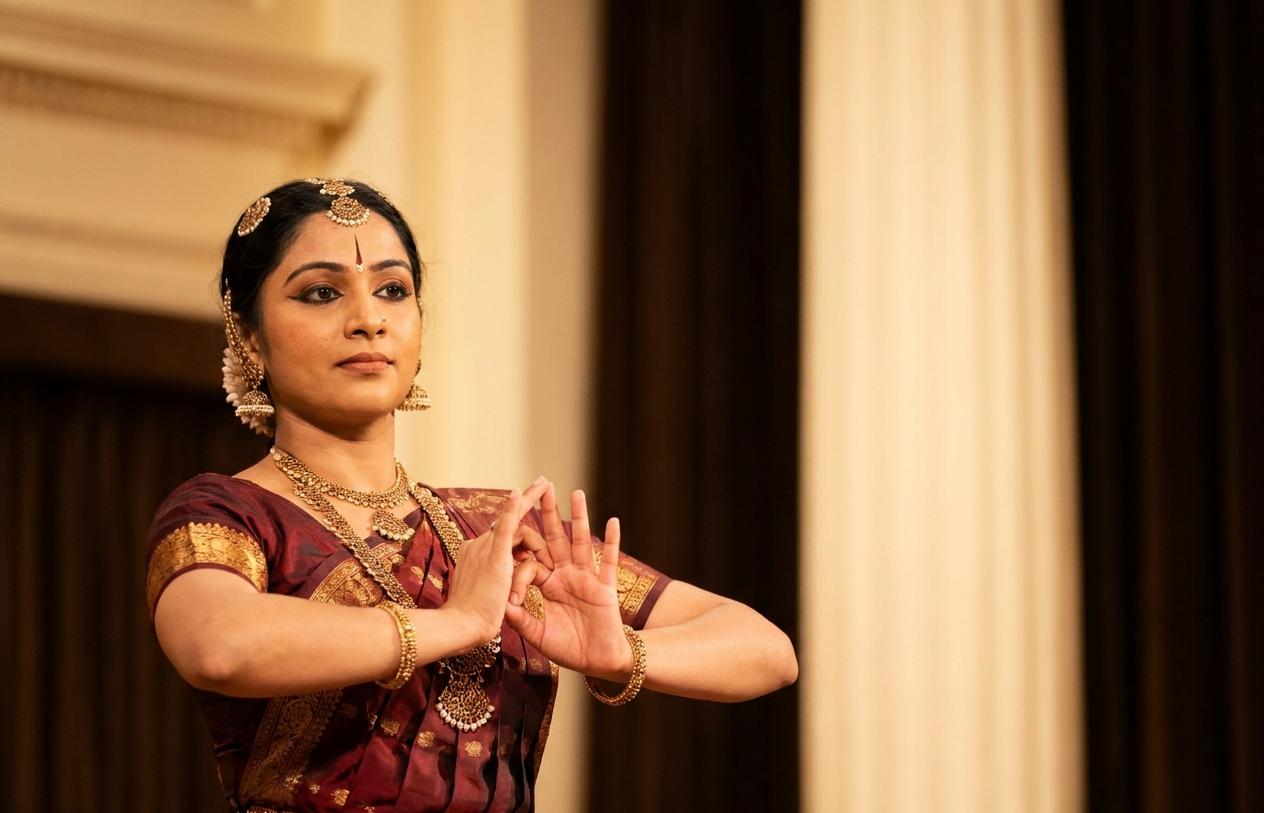
If you searched for chakra mudras, you probably expected yoga hand positions tied to the energy centers of the body. In Bharatanatyam, the word chakra means something different and much more concrete. The chakra hasta is a combined, two-handed gesture that shows a wheel or a discus, and it has a defined place in the grammar of hastas that dancers study for years. At Sridevi Dance Academy in Lexington, Kentucky, and in our online classes for diaspora families, we teach this gesture as part of the samyukta hastas, always alongside its meaning, its form, and its use in abhinaya.
This guide explains what chakra mudras mean in the classical dance tradition, how the chakra hasta is formed, where it appears in a Bharatanatyam recital, and how it differs from the yoga idea of chakras. If you are a parent evaluating serious training for a child, or an adult returning to the art, it will also show you how a guru thinks about even a single gesture.
What chakra mudras mean in Bharatanatyam
Mudra and hasta are two words for the same idea: a hand gesture used in dance. Bharatanatyam divides its hastas into two families. The asamyukta hastas are formed with one hand, and the samyukta hastas are formed with both hands together. Chakra belongs to the second family. It is a combined gesture, so it needs both hands working as a single shape.
The Sanskrit word chakra means wheel, disc, or circle. In the dance, the gesture visualizes exactly that: a spinning disc or a wheel. Its most famous association is the sudarshana chakra, the discus carried by Vishnu, but the same hand shape can also describe the wheel of a chariot or any circular, turning object. Context, the face, and the music tell the audience which meaning the dancer intends.
This is where the search term can mislead. Online, chakra mudras usually refers to hand positions used in yoga and meditation, each linked to one of the body's energy centers. That is a different system with a different purpose. In classical dance, the hasta is not a meditation aid. It is a precise vocabulary item, taught and corrected the way a word is taught in a language.
How the chakra hasta is formed
The chakra hasta is a two-handed gesture in which the hands come together to outline a disc or wheel. The fingers are kept extended and the wrists stay controlled, so that the circular shape reads clearly from the back of an auditorium. The precise arrangement of the fingers and palms is taught by the guru in person, because it is learned best by watching, copying, and being corrected.
Different teachers and texts describe small details in slightly different ways, and lineages vary in how they present certain hastas. That is normal in a living tradition. What stays constant is the principle: the gesture must look like a wheel, the fingers must be clean and deliberate, and the hands must be held at a height and angle that suits the context of the line being danced.
In our studio, students learn the chakra hasta only after they have a stable foundation in the single-hand gestures and the first samyukta hastas such as anjali. The reason is practical. A combined hasta places demands on both hands, both wrists, and the shoulders. Without that groundwork, students tend to collapse the fingers or lift the shoulders, and the shape loses its meaning.
The chakra hasta in nritta, nritya, and abhinaya
Hastas serve different purposes depending on whether the dancer is performing nritta, pure rhythmic movement, or nritya and abhinaya, where gesture carries meaning. In nritta, a hasta is often chosen for its line and its aesthetic fit with the adavu. In abhinaya, the same hasta becomes a word.
When the chakra hasta appears in abhinaya, the most common use is to depict the discus of Vishnu in a stotra, a padam, or a story from the Puranas. A dancer narrating the tale of Gajendra moksha, for example, may use the gesture to show the discus being released. The same gesture can describe a wheel in a narrative about a chariot, or something that turns and revolves. Skilled dancers also learn when not to use it, because over-literal gesturing can flatten a line that should be felt in the eyes and face.
This is why we teach abhinaya as a layered skill. The hand shows the object. The eyes, the neck, and the expression show the emotion around it. A student who has learned the drishti bheda and griva bheda can make a single chakra hasta feel like an invocation, a threat, or an act of protection, depending on the line.
Chakra mudras in yoga and why the two should not be mixed
In yoga and related meditation practices, chakra mudras are hand positions associated with the traditional idea of energy centers along the spine. The practitioner holds a seated posture, focuses on the breath, and uses a gesture to support concentration. The goal is inner stillness.
In Bharatanatyam, the goal is communication and craft. The chakra hasta is a visual word, and it has to be legible to an audience that may include people who have never seen the art form. Using the two ideas interchangeably leads to confusion, and it can quietly weaken a student's understanding of the form. We encourage families to appreciate both traditions on their own terms. A student can respect yoga and still learn that the dance hasta called chakra is its own thing, with its own rules.
The overlap in vocabulary is not a coincidence, since both traditions draw on a shared Sanskrit and philosophical heritage. But a shared word is not a shared technique. Our guide on how hand mudras in Bharatanatyam differ from yoga gestures covers this difference in more depth for students who want to go further.
Common mistakes students make with the chakra hasta
The first mistake is collapsed fingers. When the fingers droop, the wheel disappears. Students are taught to keep the fingers lively and extended without tension, and to check the shape in a mirror during practice.
The second mistake is a stiff or lifted shoulder. Because both hands are involved, many beginners hike up their shoulders. A calm shoulder line keeps the gesture elegant and protects the neck and upper back. Our guru brings a scientific eye to this, because precision and safety in practice go together.
The third mistake is treating the hasta as decoration. A gesture without meaning is just a shape. We ask students to say what the hasta means, in which context it appears, and which alternatives exist, before it is added to a piece.
The fourth mistake is rushing. Hastas are learned slowly, repeated daily in short sessions, and corrected patiently. A few focused minutes with a clear target are worth more than a long, distracted practice.
How to practice the chakra hasta at home
Begin with a short warm-up of the fingers and wrists, then sit or stand in a relaxed upright posture. Form the hasta slowly and check three points: the fingers are extended, the wrists are even, and the shoulders are quiet. Hold for a few breaths, release, and repeat.
Next, practice moving into the hasta from a neutral position and out again, keeping the transition smooth. When you are comfortable, add a simple drishti and a gentle griva movement so that the gesture connects with the face. Parents can support younger students by asking them to explain, in their own words, what the hasta shows and when a dancer might use it. Explaining is a good test of understanding.
Always follow your guru's version of the gesture. Written descriptions and videos are helpful reminders, but only a teacher can correct small errors in the angle of the palm or the spread of the fingers.
Learning hastas in Lexington or online
At Sridevi Dance Academy, hastas are taught within a structured, multi-year curriculum rooted in guru-shishya parampara. Students move from adavus and foundational single-hand gestures to samyukta hastas, then to abhinaya, and eventually to the pieces of the margam, from alarippu to jathiswaram, varnam, and tillana. Theory and meaning are taught alongside technique, so students understand what they perform.
Classes are held in person in Lexington, Kentucky, and online for families across the diaspora who want authentic training wherever they live. If you would like to see how the chakra hasta and its neighbors are taught, the best way is to watch a class and speak with the guru.
Common questions
What is the chakra mudra in Bharatanatyam?
Chakra is a samyukta hasta, which means it is formed with both hands together. It represents a wheel or a discus, most famously the discus of Vishnu, and it is also used to show a chariot wheel or anything circular and turning.
Are Bharatanatyam chakra mudras the same as yoga chakra mudras?
No. In yoga, chakra mudras are meditation gestures linked to energy centers in the body. In Bharatanatyam, the chakra hasta is a precise gesture in the dance vocabulary used to communicate meaning to an audience. The two share a Sanskrit word but not a purpose or technique.
What is the difference between samyukta and asamyukta hastas?
Asamyukta hastas are single-hand gestures, while samyukta hastas are double-hand gestures. Chakra belongs to the samyukta group, along with gestures such as anjali, so both hands must form one clear shape.
When do students learn the chakra hasta?
Students usually meet it after they have a firm grounding in adavus, aramandi, and the single-hand hastas. The exact order depends on the guru and the student, but combined hastas are introduced once hand and wrist control are steady.
Can adults learn Bharatanatyam hastas like chakra?
Yes. Adult beginners can learn hastas with patience and regular practice. A guru will adjust the pace, explain the meaning of each gesture, and correct the details so that the hand shapes are clear and comfortable.
Does Sridevi Dance Academy teach hastas online?
Yes. We teach in person in Lexington, Kentucky, and online for families across the diaspora. Hastas are taught step by step with close attention to form, meaning, and safe practice, and you can schedule a trial class to see how it works.