intermediate
Bharatanatyam Eye Movements: A Guru's Guide to Drishti Bheda
The eyes carry the soul of Bharatanatyam. A guru's guide to the eight eye movements of drishti bheda, what each glance means, and how to train them.
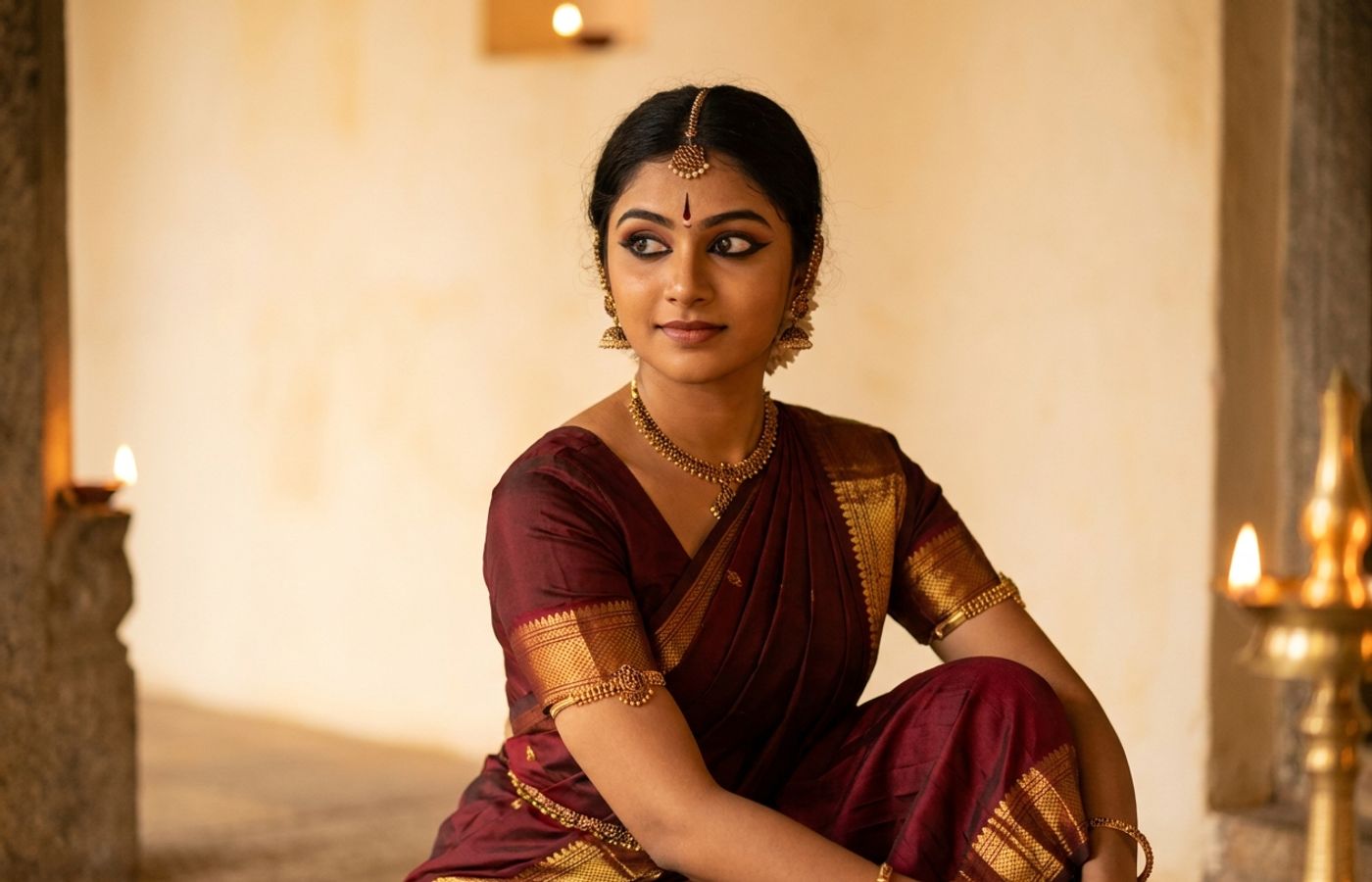
In Bharatanatyam, the eyes are not decoration. They are the beginning of expression. Before a single emotion reaches an audience, it must first live in the dancer's gaze, which is why serious training gives Bharatanatyam eye movements the same care as footwork or hand gestures. The classical name for this discipline is drishti bheda, the varieties of the glance, and it is one of the first doors a student walks through on the way from mechanical steps to true storytelling.
A famous verse from the Abhinaya Darpana, the text that anchors much of our grammar, sets the order plainly: where the hand goes, the eyes follow; where the eyes go, the mind follows; where the mind goes, there is bhava, the mood; and where bhava lives, rasa, the aesthetic flavor, is born. Read it backwards and you understand why the eyes matter so much. Rasa, the feeling an audience actually experiences, traces all the way back to a disciplined, intentional glance.
Why Bharatanatyam eye movements matter
Bharatanatyam has two broad halves. Nritta is pure, rhythmic movement with no story attached. Nritya, and the wider world of abhinaya, is expressive dance that carries meaning. The hands may form a mudra for a deer, a flower, or a river, but it is the eyes that tell us whether the dancer is admiring that flower, fearing it, or offering it to a god. Without trained eyes, a technically clean dancer still looks blank. With them, even a small gesture becomes alive.
There is also a practical reason. On a stage, under lights, at a distance, the audience cannot read subtle changes in the face unless the eyes lead clearly and confidently. A glance that drifts, blinks nervously, or loses focus breaks the illusion. This is why we treat the eyes as a muscle to be conditioned, not a reflex to be left alone. The eight glances of drishti bheda give a student a shared vocabulary and a clear practice map.
Drishti bheda: the eight glances, or ashta drishti
The tradition organizes the movements of the eyes into eight named glances, known together as ashta drishti. Each has a Sanskrit name, a precise movement, and a set of situations it is used for. Learning them is not about memorizing a list. It is about building a palette, so that when a song calls for longing, worship, anger, or wonder, the dancer already owns the exact glance that carries it. Here are the eight, as we teach them at the studio.
1. Sama. The eyes are held still and level, without any movement. It is the steady, grounded gaze used for the opening of a dance, for holding balance, and for gazing calmly upon the deity. Sama teaches stillness, which is harder than it sounds and is the foundation for everything that moves.
2. Alokita. The eyeballs are rolled around in a smooth circular motion. This rolling glance is used to show circular movement, to survey all around a space, and to convey pleading. It trains control at the edges of the eye's range.
3. Sachi. The dancer looks through the outer corners of the eyes. This sidelong glance is used for hinting, for a shy or knowing look, and above all for expressions of love. Sachi is one of the most quietly powerful glances in abhinaya.
4. Pralokita. The eyes move steadily from side to side. It is used to show swinging motion and to look deliberately on either side, following a bird in flight or a swing rocking back and forth. Where sachi hints, pralokita openly scans.
5. Nimivitte. The eyes are half shut, with the gaze turned inward toward the heart. This inward-drawn glance is used for meditation, for worship, and for the sensation of touch. It shows that not all seeing points outward; some of it points within.
6. Ullokita. The eyes are raised, looking upward. It is the glance for tall things, for the sky and the moon, for spires and flags. Ullokita lifts the whole face and lends a sense of aspiration and height.
7. Anuvrittecha. The eyes move rapidly up and down. This quick vertical glance is used both for expressing anger and, in a gentler register, for beckoning with affection. Context and the rest of the body decide which meaning the audience reads.
8. Avalokita. The eyes are lowered, looking downward. It is used for viewing one's own reflection or shadow, and for looking at one's own limbs, such as admiring anklets or a hand held low. Avalokita brings the gaze home to the self.
How the glances work with the head and neck
Drishti bheda rarely acts alone. It partners with shiro bheda, the movements of the head, and griva bheda, the movements of the neck. Together these three form the upper-body grammar of expression. A downward glance paired with a lowered head reads very differently from the same glance held against a lifted, proud neck. Students who study the eyes in isolation and then reunite them with head and neck movements find that their abhinaya suddenly gains depth and precision.
Training the eyes safely and well
Eye practice should feel steady, never strained. We begin with short sessions, isolating one glance at a time in front of a mirror, so the student can see and correct the exact path of the pupil. Sama comes first, because the ability to hold a still, level gaze makes every moving glance cleaner. From there we add the rolling and side-to-side patterns, keeping the head quiet so the movement is truly in the eyes and not a disguised turn of the neck.
A few principles keep the practice healthy. Work in good light but never stare into a bright source. Keep sessions brief and frequent rather than long and forced. Blink naturally between repetitions so the eyes stay comfortable. If there is any ache or dryness, rest. As with the aramandi, the half-sitting posture at the heart of our technique, progress comes from patient, correct repetition under a guru's eye, not from pushing through discomfort. Younger students in particular practice in small, playful doses that build coordination without fatigue.
Bringing the eyes into a piece
Once the glances are reliable on their own, the real work begins: choosing the right one for the moment. In a devotional passage, nimivitte can carry inward worship while ullokita lifts the gaze to the divine. In a love scene, sachi does more than a whole sentence could. The mature dancer does not think about the mechanics on stage. The glances have become part of the body, and the mind is free to feel, so that bhava flows and rasa reaches the audience just as that old verse promised.
Learning drishti bheda in Lexington and online
At Sridevi Dance Academy in Lexington, Kentucky, drishti bheda is taught the way it has always been passed down, one guru to one shishya, within the guru-shishya parampara, with the theory explained alongside the movement so students understand what they are doing and why. For diaspora families beyond Kentucky, the same structured training is available online, so a child in another state or country can still learn the eight glances correctly, in order, with feedback on every session. Whether in the studio or on screen, the goal is the same: eyes that do not merely look, but speak.
Common questions
What is drishti bheda in Bharatanatyam?
Drishti bheda means the varieties of the glance. It is the classical system of Bharatanatyam eye movements, describing how a dancer uses the eyes to carry emotion and meaning during abhinaya, the expressive part of the dance.
How many eye movements are there in Bharatanatyam?
There are eight, known together as ashta drishti: sama, alokita, sachi, pralokita, nimivitte, ullokita, anuvrittecha, and avalokita. Each has a specific movement and a set of situations it is used to express.
Why are eye movements so important in classical dance?
A well-known verse teaches that where the eyes go, the mind follows, and from the mind come mood and aesthetic feeling. Trained eyes turn a technically correct dancer into an expressive one, especially on stage where the audience reads emotion through the gaze.
How do beginners start practicing the eye movements?
Beginners start with sama, a still and level gaze, in front of a mirror, then add moving glances one at a time while keeping the head quiet. Sessions stay short and are guided by a teacher so the movement stays clean and comfortable.
Can I learn Bharatanatyam eye movements online?
Yes. Sridevi Dance Academy teaches drishti bheda both in person in Lexington, Kentucky and online for diaspora families, with direct feedback on each glance so students learn the movements correctly and in the right order.
Are Bharatanatyam eye exercises safe for the eyes?
When practiced correctly they are gentle. Work in good light without staring at a bright source, keep sessions brief, blink naturally, and rest if there is any strain. As with all of our technique, safe, patient repetition under a guru matters more than pushing hard.